

Why Is My Air Conditioner Leaking? Common Causes, Fixes, and When to Call
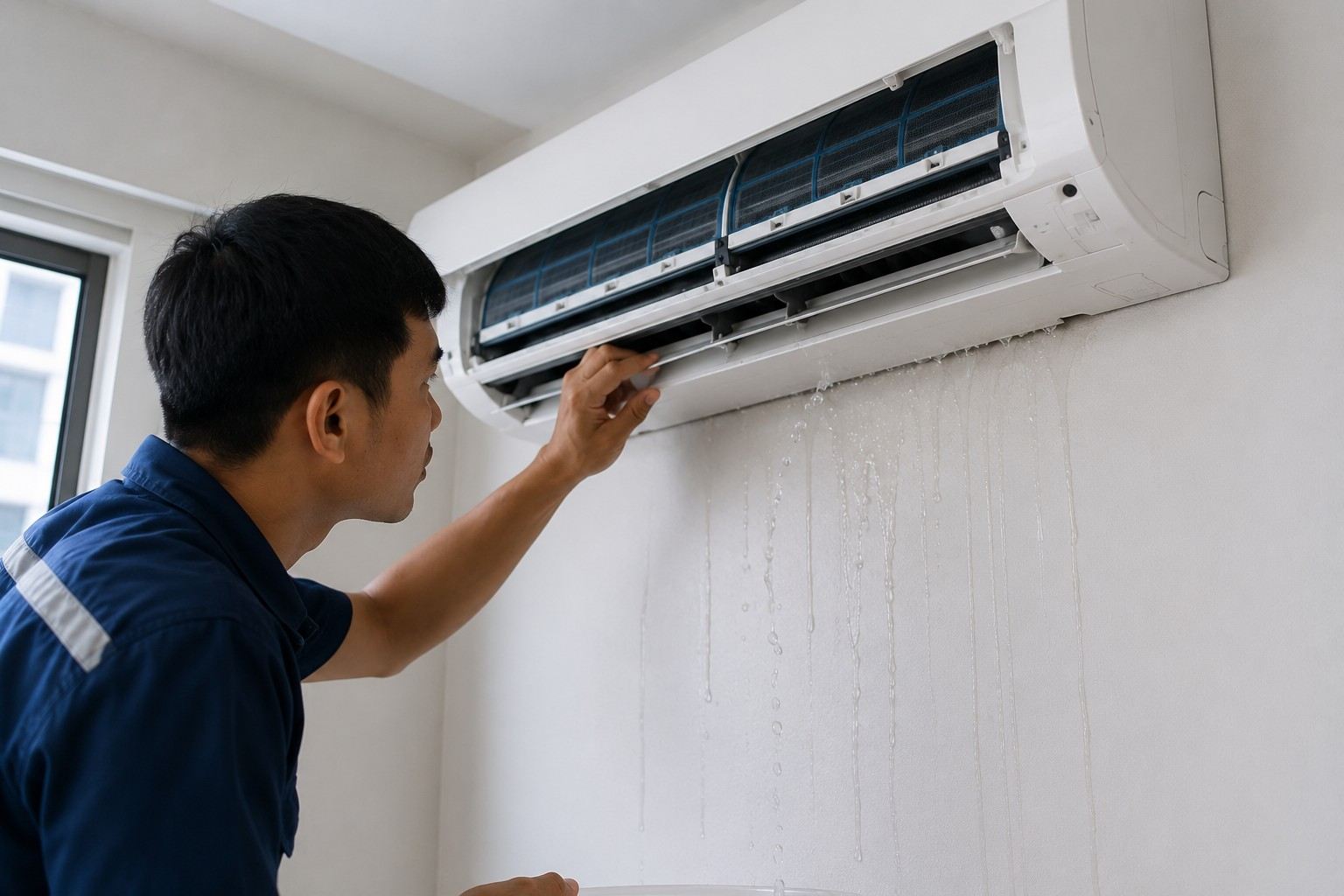
If your air conditioner is leaking water, the problem is often caused by a blocked drain pipe, dirty air filter, frozen evaporator coil, or low refrigerant. In most cases, the leak occurs because condensation cannot drain away properly. While some causes can be resolved through routine maintenance, others require professional attention to prevent costly repairs.
Understanding why is my air conditioner leaking allows you to act quickly before the issue causes water damage, poor cooling performance, or higher electricity bills. This guide explains the most common causes, simple troubleshooting steps, and when it is best to contact a professional air conditioner technician.
Why is Water Leaking From My Air Conditioner?
Water leakage usually occurs because the drainage system is blocked or the condensate drain pipe has become damaged. As your air conditioner cools the room, it removes moisture from the air. This moisture collects as condensation and is designed to drain safely through a condensate pipe. If the pipe becomes blocked or damaged, the water cannot drain properly and may begin leaking from the indoor unit.
This problem can occur in both split-system and ducted air conditioners and is particularly common in Singapore because of the country’s hot and humid climate. Depending on the cause, some issues can be resolved quickly, while others require professional home aircon servicing.
Common Causes of a Leaking Air Conditioner
A leaking air conditioner is usually a sign that something is preventing condensation from draining correctly. From blocked drainpipes to frozen evaporator coils, these are the most common causes and their typical warning signs.
1. Blocked or Clogged Drain Pipe
A blocked condensate drain pipe is one of the most common causes of water leakage. Dust, dirt, algae, and mould can accumulate inside the pipe over time, preventing condensation from draining properly and causing water to overflow from the indoor unit.
- Water drips from the indoor unit or nearby wall.
- A musty odour comes from the air conditioner.
- The leak becomes worse the longer the unit operates.
Cleaning the drain pipe during routine servicing helps prevent this problem.
2. Dirty Air Filter
A dirty air filter restricts airflow, causing the evaporator coil to become excessively cold. As ice forms on the coil and later melts, excess water can overflow from the drain tray.
- Weak airflow from the indoor unit.
- Ice forming on the evaporator coil.
- Reduced cooling performance.
Cleaning the air filters every two to four weeks helps maintain proper airflow and reduce the risk of water leakage.
3. Cracked or Rusted Drain Tray
The drain tray collects condensation before directing it into the drainage pipe. Over time, older drain trays may crack or develop rust, allowing water to leak directly onto the floor.
- Water leaks despite a clear drain pipe.
- Visible rust inside the indoor unit.
- The air conditioner has been used for many years.
A damaged drain tray usually needs to be replaced to stop the leak completely.
4. Low Refrigerant Levels
Low refrigerant affects the operating pressure within the system, causing the evaporator coil to freeze. When the ice melts, excess water may overwhelm the drainage system and result in leakage.
- The room takes longer to cool.
- Ice forms on the evaporator coil or refrigerant pipes.
- A hissing sound comes from the unit.
A qualified technician should inspect the system, repair any refrigerant leak, and fill the aircon gas top up if required.
5. Incorrect Installation
If the indoor unit is not installed at the correct angle, condensation cannot flow properly towards the drain pipe. Instead, water collects inside the unit until it eventually overflows.
- The air conditioner has leaked since installation.
- Water drips from one side of the indoor unit.
- The drain pipe appears to be connected correctly.
Correcting the installation angle usually resolves the problem.
6. Frozen Evaporator Coil
A frozen evaporator coil is commonly caused by restricted airflow, dirty filters, or low refrigerant levels. Once the ice melts, a large amount of water can overflow from the drain tray.
- Ice forms behind the front cover.
- Warm or weak airflow from the air conditioner.
- Water leakage occurs after the unit is switched off.
Identifying and resolving the cause of the frozen evaporator coil is essential to prevent recurring leaks and further damage.
7. Damaged or Disconnected Drain Hose
The drain hose carries condensation from the indoor unit to the outdoor drainage point. If the hose becomes cracked, loose or disconnected, water may leak before it reaches the drainage outlet.
- Water drips from the pipe connection.
- The drain hose appears bent, cracked or damaged.
- Water continues leaking even after the air filter has been cleaned.
Replacing or reconnecting the drain hose will usually restore proper drainage and stop the leak.
How to Check Your Air Conditioner Safely at Home
Before arranging a repair, there are a few simple checks you can carry out yourself. These steps are safe for most homeowners and may help you identify the cause of the leak.
Step 1: Switch Off the Air Conditioner
Turn off the air conditioner at the power source before carrying out any inspection. This helps prevent electrical hazards and keeps the inspection safe.
Step 2: Inspect the Air Filter
Remove the air filter and check whether it is covered with dust or dirt. If necessary, wash it with clean water, allow it to dry completely, and then reinstall it before operating the unit again.
Step 3: Check for Ice on the Indoor Unit
Inspect the indoor unit for any visible ice on the vents or evaporator area. If ice is present, leave the system switched off and allow it to thaw naturally before turning it back on.
Step 4: Look for Visible Signs of Water Leakage
Inspect the indoor unit and the surrounding area for signs of water damage. Damp patches, water stains or dripping water may help identify where the leak is coming from.
When Can You Fix a Leaking Air Conditioner Yourself?
Not every leaking air conditioner requires professional repairs. Some problems can be resolved with basic maintenance, while others should always be handled by a qualified technician.
Dirty Air Filter
A dirty air filter is one of the easiest problems to fix. Simply remove the filter, rinse it thoroughly with clean water, allow it to dry completely, and reinstall it.
Blocked Air Vents
Make sure curtains, furniture or other objects are not blocking the air vents. Good airflow helps prevent the evaporator coil from freezing and allows the system to operate efficiently.
Ice on the Indoor Unit
If you notice ice forming on the indoor unit, switch the air conditioner off immediately. Allow the ice to melt naturally before restarting the system to avoid damaging the components.
Dirty Outdoor Unit
Inspect the outdoor condenser for leaves, dust and other debris that may restrict airflow. Removing the obstruction helps the unit operate more efficiently.
When to Call a Professional
Warning Sign | What It Likely Means |
Leak returns after cleaning the filter | Deeper blockage or evaporator coil issue |
Hissing sound near the unit | Possible refrigerant leak |
Visible rust or corrosion | Damaged drip tray or casing |
Leak from ceiling-mounted or ducted unit | Requires specialised tools and access |
Cooling performance has dropped | Refrigerant or evaporator coil problem |
Common Mistakes to Avoid
A leaking air conditioner should never be ignored. Avoiding these common mistakes can help prevent further damage and reduce unnecessary repair costs.
- Ignoring a small leak: Even a minor drip may indicate a blocked drain pipe or another developing issue. Leaving it unattended can result in more serious damage and higher repair costs.
- Not cleaning or replacing the air filter: A dirty air filter restricts airflow, which may cause the evaporator coil to freeze and eventually lead to water leakage.
- Attempting to top up the refrigerant yourself: Refrigerant should only be handled by a qualified technician. Attempting to recharge the system without the proper equipment can damage the air conditioner and may void the manufacturer’s warranty.
- Skipping maintenance after the leak stops: A leak may disappear temporarily, but the underlying problem could still remain. Without proper servicing, the issue is likely to return.
Regular servicing and prompt repairs help prevent recurring leaks, improve cooling performance and extend the lifespan of your air conditioner.
How to Prevent Your Air Conditioner from Leaking
Regular maintenance helps prevent water leaks and keeps your air conditioner operating efficiently. Following a few simple maintenance practices can reduce the risk of expensive repairs and extend the lifespan of your unit.
- Clean your air filters every two to four weeks to maintain proper airflow.
- Keep the condensate drain pipe clear to prevent blockages caused by dust, dirt and mould.
- Arrange professional servicing every three to six months, depending on how frequently you use the air conditioner.
- Watch for early warning signs such as weak airflow, unusual noises and water leakage.
- Keep both the indoor and outdoor units free from dust, leaves and other debris.
These simple steps can help prevent water leaks and keep your air conditioner operating reliably throughout the year.
Key Takeaways
- A blocked drain pipe is the most common cause of an air conditioner leaking.
- Dirty air filters, frozen evaporator coils and low refrigerant can also lead to water leakage.
- Clean the air filter and check for visible ice before arranging professional repairs.
- Do not ignore small leaks, as they can develop into more serious and costly problems.
- Regular servicing helps prevent leaks and keeps your air conditioner operating efficiently.
- If the leak continues, arrange for the unit to be inspected by a qualified technician.
Conclusion
A leaking air conditioner usually indicates that something within the system requires attention. Whether the cause is a blocked drain pipe, a dirty air filter or a frozen evaporator coil, identifying and resolving the issue early can help prevent further damage and more costly repairs.
Regular servicing and routine cleaning play an important role in preventing water leaks and maintaining efficient cooling performance. However, if the leak continues after basic maintenance has been carried out, it is best to arrange for a qualified technician to inspect the system, identify the underlying cause and carry out the necessary repairs.
Frequently Asked Questions
Why does my aircon leak water when it's turned on?
A blocked drain pipe or melting ice on the evaporator coil can cause water to leak once the air conditioner starts operating. As condensation forms during cooling, the water cannot drain away properly if the drainage system is blocked.
How do I fix a leaking aircon by myself?
Simple problems, such as cleaning a dirty air filter or clearing an accessible drain blockage, can often be handled yourself. However, issues involving refrigerant, electrical components or internal parts should always be repaired by a qualified technician.
Does a leaking aircon mean it needs to be replaced?
Not necessarily. Most water leaks are caused by maintenance issues or worn components that can be repaired. Replacement is generally only recommended if the unit is very old, unreliable or no longer economical to repair.
Can a leaking aircon damage my ceiling?
Yes. If the indoor unit is installed on the ceiling, prolonged water leakage can cause ceiling stains, mould growth and damage to surrounding building materials if left untreated.
Why does my aircon leak more during the rainy season?
Higher humidity during the rainy season causes your air conditioner to remove more moisture from the air. If the drain pipe is partially blocked or the drainage system is not functioning properly, the increased condensation can make water leaks more noticeable.